Losing weight by having sex? Calories, exercise and common myths
Sexual activity uses energy, but it is not a weight-loss programme, and no position guarantees weight loss.
Combining pleasure and fitness is an intriguing idea: if the body moves, how much energy does it use? It is a reasonable question, as long as energy spent during one activity is not confused with lasting weight change. The answer depends on duration, intensity, individual characteristics and context. A ranking of positions cannot predict the outcome for every couple or tell you how enjoyable an experience will be.
In this article
Using calories does not automatically mean losing weight · What one scientific study measured · Can sex replace exercise? · GolfSupport rankings and calories by position · Pleasure and orgasm cannot be ranked in calories · Stress, the body and relationships: avoiding added pressure · A practical conclusion: movement and intimacy each have value
Using calories does not automatically mean losing weight
Energy expenditure is only part of the picture. Losing or maintaining weight involves sustainable habits over time, eating patterns, physical activity and individual circumstances. NIDDK identifies a sustainable eating plan and regular movement as useful elements of weight management. It does not recommend replacing these with sex or trying to reach a particular calorie target during intimacy.
Language matters too: “burning calories” does not mean using only body fat, and an energy estimate does not demonstrate weight loss. Sex does not have to become a workout to justify its value. It can be part of intimate life without an appearance-related target or a role in compensating for what you have eaten.
What one scientific study measured
A study published in PLOS ONE in 2013 involved 21 young, healthy heterosexual couples, comparing sexual activity in their usual environment with a treadmill exercise session. Researchers used a portable device to estimate energy expenditure. Mean expenditure during sexual activity was about 101 kcal in men and 69 kcal in women, with a mean duration of approximately 25 minutes.
These are averages observed in a particular group, not a universal calorie rate. Participants were young, the sample was limited and experiences varied in duration. The study did not test a weight-loss programme or demonstrate that a particular position caused weight loss. An average cannot tell you how much energy you or your partner will use.
Can sex replace exercise?
In the same study, average expenditure during sexual activity was lower than during the 30-minute treadmill session. A 2022 scientific review also highlighted that the physical demands of sexual activity vary with context and that better-quality studies are needed. The useful conclusion is limited: sex can involve movement and effort, but is not a predictable substitute for a regular physical activity programme.
Walking, exercise or other activities suited to your circumstances allow movement to be planned consistently without depending on your own or someone else’s desire. Health needs and personal goals can be discussed with a qualified professional. Intimacy should not become an obligation to “exercise” or a measure of how committed you are to looking after yourself.
GolfSupport rankings and calories by position
Rankings attributed to GolfSupport circulate online, linked to a survey of 112 couples and measurements using Fitbits. We have not verified a complete scientific protocol that would allow assessment of participant selection, measurements and analysis. We therefore do not present those figures as clinical data or use them to recommend a position for weight loss. A precise calorie list can appear authoritative even when the conditions that produced it are unclear.
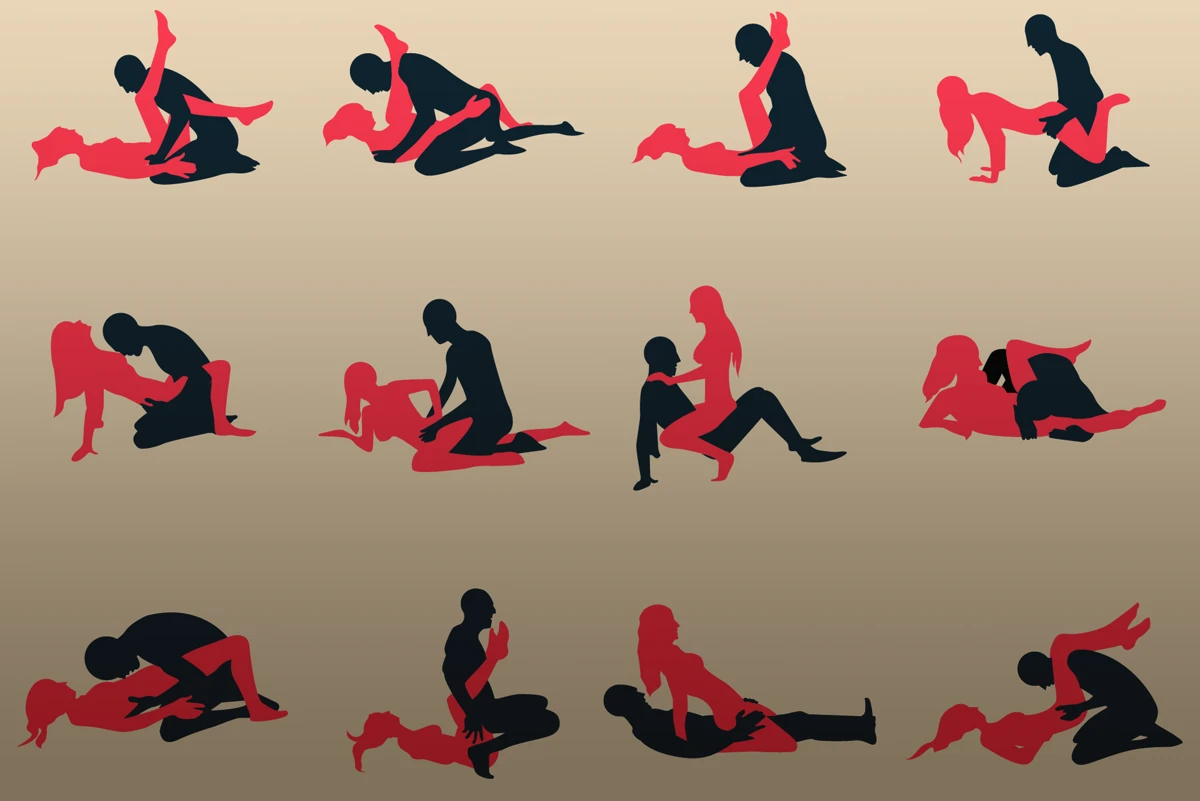
Comparing woman-on-top variants, the “wheelbarrow”, standing positions and cowgirl does not by itself identify a winner. Effort depends on more than a position’s name: duration and each person’s contribution matter. We therefore do not repeat calorie figures or orgasm percentages as individual predictions. The opening illustration is schematic, not a calorie ranking, an exercise prescription or a promise of results.
Pleasure and orgasm cannot be ranked in calories
A more physically demanding experience is not automatically more satisfying. Pleasure depends on individual preferences and sensations, not an estimate on a device display. An orgasm percentage reported in a survey cannot describe what will happen to the reader either. Communicating what feels welcome and what is uncomfortable is more useful than pursuing a record or interpreting a different response as failure.
No one needs to increase effort, prolong sex or agree to a practice to reach a calorie target. Consent remains freely given and can change. Pain and discomfort are reasons to stop, not signals to ignore for the sake of performance. A persistent physical concern calls for healthcare advice rather than an online ranking.
Stress, the body and relationships: avoiding added pressure
During difficult periods, people may feel less fit or experience less desire. Pandemic restrictions provide a historical context for these questions, but do not justify promises that sex will resolve stress, fatigue or weight gain. Wellbeing can also mean resting, recognising different needs and avoiding turning a relationship into another setting where something has to be proved.
Choosing time together may feel good for some couples; for others, at a particular moment, individual time may matter more. There is no obligation to feel better in the same way. Respecting the body also includes being able to choose not to have sex and to seek other forms of closeness, without tying that choice to weight, attractiveness or the value of the relationship.
A practical conclusion: movement and intimacy each have value
If the question is “can I lose weight by having sex?”, the cautious answer is that sex uses energy but is not a reliable weight-loss strategy. To understand pleasure and wellbeing better, start with attentiveness and realistic expectations. Massage for couples is a different experience to consider within its own boundaries: it does not replace exercise or healthcare, promise weight loss or constitute a sexual service. The related reading below helps distinguish information, curiosity and exaggerated promises.